


Genetic Counselling 101: Who Should Get Tested for Hereditary Gynaecological Cancers? June 24, 2026 – Posted in: Oncology
While routine screenings like Pap smears are essential parts of women’s health, they do not tell the whole story. For many women, the blueprint for developing gynaecological cancers—such as ovarian, fallopian tube, endometrial, and primary peritoneal cancers—is carried silently in their DNA.
In India, the conversation around hereditary cancers is shifting rapidly. Oncologists are seeing a younger median age of onset for gynaecological cancers compared to Western nations.
Because hereditary variants play a prominent role in early-onset cases, clinical bodies like the Indian Society of Medical and Paediatric Oncology (ISMPO) have updated expert consensus guidelines to help families identify their risk early.
If you are wondering whether you or a loved one needs an evaluation, here is who should seek a genetic counselling session.
- Every Patient Diagnosed with Ovarian Cancer
In India, it is now standard clinical consensus that every woman diagnosed with epithelial ovarian, fallopian tube, or primary peritoneal cancer should undergo genetic testing. This holds true regardless of her age at diagnosis or whether she has a family history of the disease.
About 15 to 20 percent of ovarian cancers are driven by inherited mutations, primarily in the BRCA1 and BRCA2 genes. Testing is crucial not just for her family, but for her own treatment. Identifying a BRCA mutation can qualify a patient for advanced, targeted therapies like PARP inhibitors, which dramatically improve outcomes.
- Women Diagnosed with Endometrial Cancer Under Age 50
Endometrial (uterine) cancer can sometimes be tied to Lynch syndrome, an inherited condition that impairs the body’s ability to repair mismatched DNA. This syndrome heavily elevates the lifetime risk of both colorectal and gynaecological cancers. If a woman is diagnosed with endometrial cancer before the age of 50, genetic counselling and germline testing are highly recommended to check for Lynch syndrome.
- Those with a Family Pattern of Early-Onset Cancers
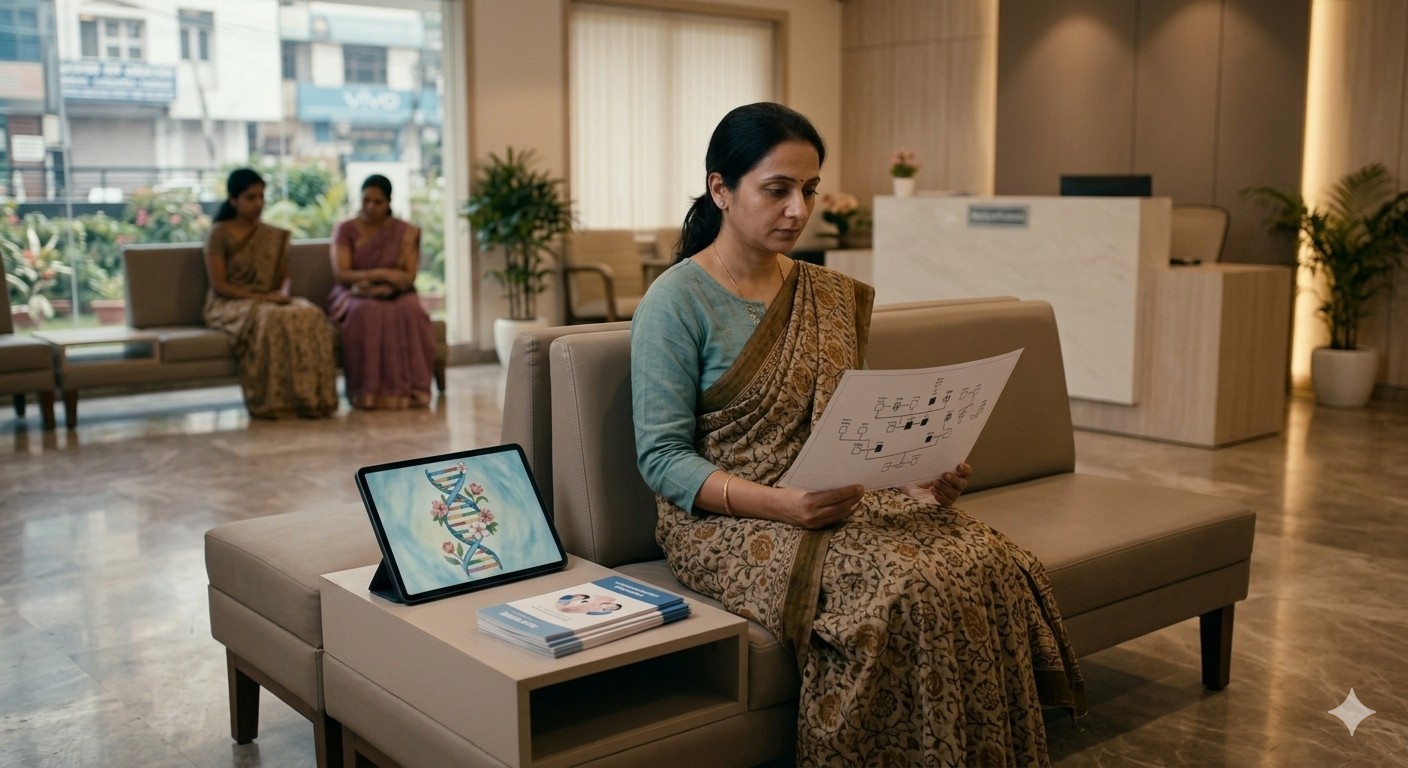
You do not need a personal cancer diagnosis to take action. Because Indian families tend to be tightly knit and multi-generational, mapping a comprehensive family health history is an incredibly effective screening tool. You should consult a genetic counsellor if you notice:
- A first-degree relative (mother, sister, daughter) who had ovarian or early-onset breast cancer.
- A clustering of related cancers on either your mother’s or father’s side, such as breast, ovarian, pancreatic, or prostate cancers.
- A strong presence of gastrointestinal and uterine cancers in the family, which strongly signals a need to rule out Lynch syndrome.
- Families with Known Consanguinity or Bloodline Mutations
In certain communities across India, marriages between first cousins or close blood relatives (consanguinity) are practiced. This can unintentionally concentrate rare, recessive genetic mutations within a lineage. Furthermore, if any relative has already tested positive for a specific pathogenic variant (like a BRCA or MSH2 mutation), other family members should seek targeted single-site genetic testing to understand their own risk profile.
Empowering Choices Through Knowledge
A genetic counselling session is not just a precursor to a blood or saliva test. A certified counsellor evaluates your lineage, explains the medical realities, and provides emotional guidance.
For women who test positive, modern medicine offers highly effective, preventative paths. These can range from enhanced surveillance and lifestyle changes to risk-reducing surgeries, ensuring that genetics do not dictate your destiny.